
UNLIMITED Audiobooks and eBooks
Over 40,000 books & works on all major devices
Get ALL YOU CAN for FREE for 30 days!
South African Memories
Lady Sarah Wilson

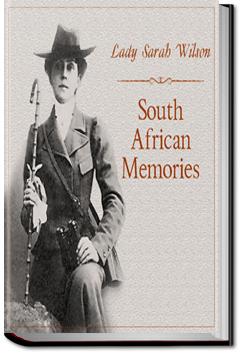 Book Overview:
Lady Sarah Isabella Augusta Wilson was the aunt of Winston Spencer Churchill. In 1899 she became the first woman war correspondent when she was recruited to cover the Siege of Mafeking for the Daily Mail during the Boer War. She moved to Mafeking with her husband at the start of the war, where he was aide-de-camp to Colonel Robert Baden-Powell. Baden-Powell asked her to leave Mafeking for her own safety after the Boers threatened to storm the British garrison. This she duly did, and set off on a madcap adventure in the company of her maid, traveling through the South African countryside until she was finally captured by the enemy and returned to the town in exchange for a horse thief being held there. Dwindling food supplies became a constant theme in the stories she sent back to the Mail and the situation seemed hopeless when the garrison was hit by an outbreak of malarial typhoid. In this weakened state the Boers managed to penetrate the outskirts of the town but the British stood firm and repelled the assault. ( Summary by Wikipedia )
Lady Sarah Isabella Augusta Wilson was the aunt of Winston Spencer Churchill. In 1899 she became the first woman war correspondent when she was recruited to cover the Siege of Mafeking for the Daily Mail during the Boer War. She moved to Mafeking with her husband at the start of the war, where he was aide-de-camp to Colonel Robert Baden-Powell. Baden-Powell asked her to leave Mafeking for her own safety after the Boers threatened to storm the British garrison. This she duly did, and set off on a madcap adventure in the company of her maid, traveling through the South African countryside until she was finally captured by the enemy and returned to the town in exchange for a horse thief being held there. Dwindling food supplies became a constant theme in the stories she sent back to the Mail and the situation seemed hopeless when the garrison was hit by an outbreak of malarial typhoid. In this weakened state the Boers managed to penetrate the outskirts of the town but the British stood firm and repelled the assault. ( Summary by Wikipedia )
How does All You Can Books work?
All You Can Books gives you UNLIMITED access to over 40,000 Audiobooks, eBooks, and Foreign Language courses. Download as many audiobooks, ebooks, language audio courses, and language e-workbooks as you want during the FREE trial and it's all yours to keep even if you cancel during the FREE trial. The service works on any major device including computers, smartphones, music players, e-readers, and tablets. You can try the service for FREE for 30 days then it's just $19.99 per month after that. So for the price everyone else charges for just 1 book, we offer you UNLIMITED audio books, e-books and language courses to download and enjoy as you please. No restrictions.
Try now for FREE!

"Love your service - thanks so much for what you do!"
- Customer Cathryn Mazer
"I did not realize that you would have so many audio books I would enjoy"
- Customer Sharon Morrison
"For all my fellow Audio Book & E-Book regulars:
This is about as close to nirvana as I have found!"
- Twitter post from @bobbyekat
Community Reviews
Lady Sarah Wilson (1865-1929) traveled from England to South Africa in 1899 and arrived just prior to the commencement of hostilities between Great Britain and the Afrikaners of Dutch and German decent. Sarah Wilson was the youngest of eleven children born to John Spencer-Churchill, 7th Duke of Marl