
UNLIMITED Audiobooks and eBooks
Over 40,000 books & works on all major devices
Get ALL YOU CAN for FREE for 30 days!
The Chronicles of Crime - Volume 1
Camden Pelham

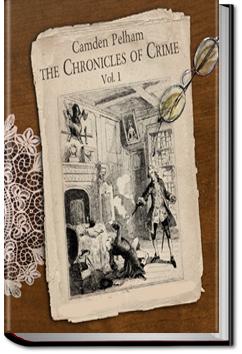 Book Overview:
This catalogue of human weakness and at times downright atrocity has been brought together by Camden Pelham, a barrister-at-law of the Inner Temple during the second half of the 19th century. It is given in chronological order, the first case listed is from 1700, and the final case in Volume 1 being in 1816. Some of the most famous cases of the age are listed, from Dick Turpin and Captain Kidd, to the assassination of Spencer Perceval MP, and the Luddites. Some cases will shock with descriptions of horrific murders, whilst others will amuse with the idiocy of the perpetrators. These 275 cases give a fascinating insight into life during 18th and 19th century Britain
This catalogue of human weakness and at times downright atrocity has been brought together by Camden Pelham, a barrister-at-law of the Inner Temple during the second half of the 19th century. It is given in chronological order, the first case listed is from 1700, and the final case in Volume 1 being in 1816. Some of the most famous cases of the age are listed, from Dick Turpin and Captain Kidd, to the assassination of Spencer Perceval MP, and the Luddites. Some cases will shock with descriptions of horrific murders, whilst others will amuse with the idiocy of the perpetrators. These 275 cases give a fascinating insight into life during 18th and 19th century Britain
How does All You Can Books work?
All You Can Books gives you UNLIMITED access to over 40,000 Audiobooks, eBooks, and Foreign Language courses. Download as many audiobooks, ebooks, language audio courses, and language e-workbooks as you want during the FREE trial and it's all yours to keep even if you cancel during the FREE trial. The service works on any major device including computers, smartphones, music players, e-readers, and tablets. You can try the service for FREE for 30 days then it's just $19.99 per month after that. So for the price everyone else charges for just 1 book, we offer you UNLIMITED audio books, e-books and language courses to download and enjoy as you please. No restrictions.
Try now for FREE!

"Love your service - thanks so much for what you do!"
- Customer Cathryn Mazer
"I did not realize that you would have so many audio books I would enjoy"
- Customer Sharon Morrison
"For all my fellow Audio Book & E-Book regulars:
This is about as close to nirvana as I have found!"
- Twitter post from @bobbyekat